
About
Lauren Pinkston
A Committment to Conscience:
Restoring Reason, Representation, and Integrity to Tennessee's Highest Office
About
Lauren Pinkston
A Committment to Conscience:
Restoring Reason, Representation, and Integrity to Tennessee's Highest Office
I will not change my values in order to win a vote or a donor.
I will keep a close watch on how your tax dollars are spent, so government stays transparent, accountable, and fair to future generations.
I will lead in a way that centers human flourishing, individual rights, and Tennessee's children.
I will focus on the issues that matter most to Tennesseans rather than fringe issues that divide.
I will convene the most creative minds using modern technology to solve Tennessee's most complex issues.
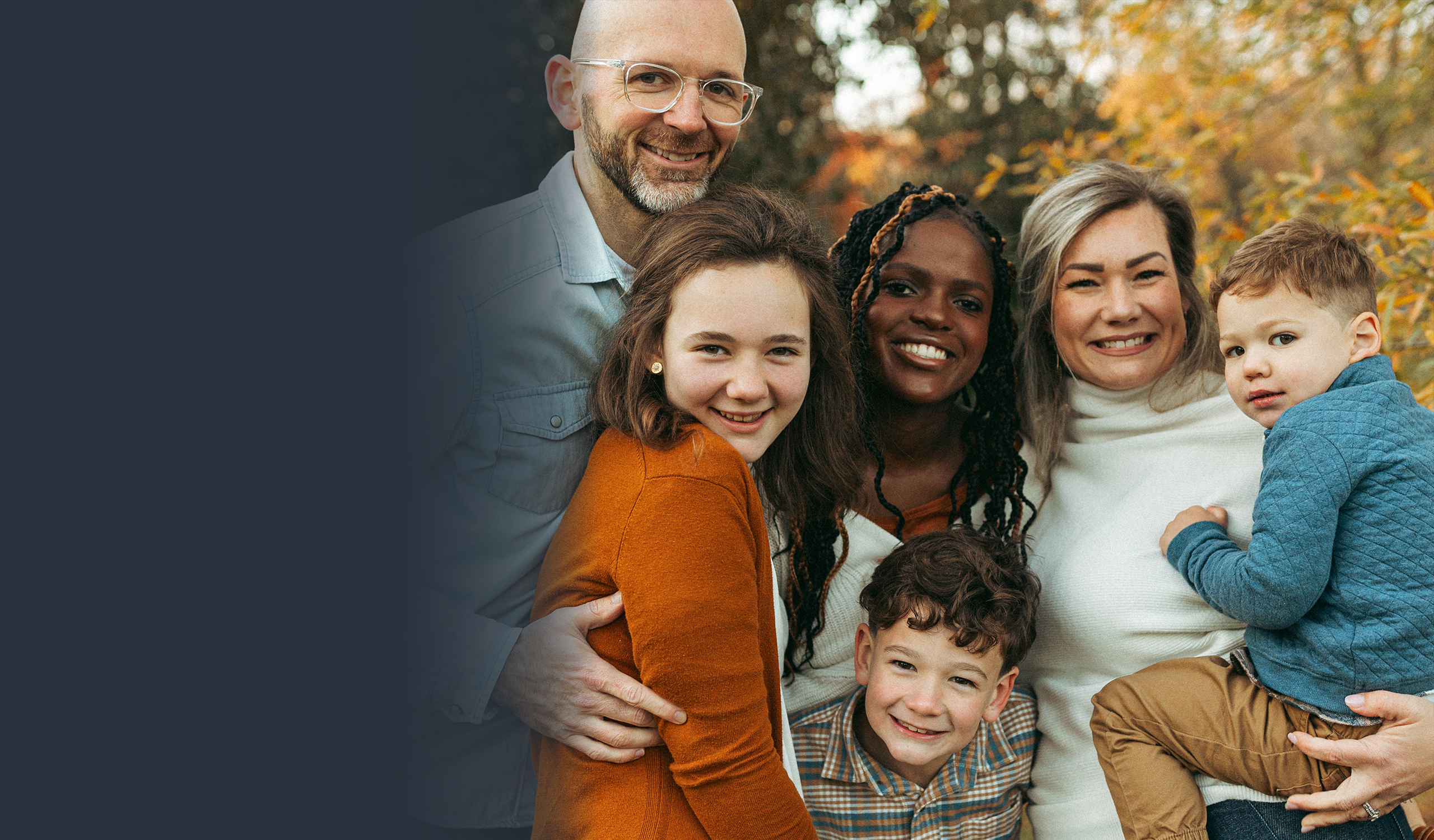
I’m a wife, mother of 4 kids born on 3 continents, and a 7th generation Tennessean fighting for practical solutions to improve Tennessee. My life has been shaped by both the hills of Tennessee and experiences across the globe, giving me a unique perspective on leadership, justice, and opportunity.
I’m running to restore leadership focused on real problems, not partisan fights. After 15 years addressing human trafficking and creating safe economic opportunities around the world, I returned home to bring the same problem-solving mindset to Tennessee.
My earliest years were spent in the same home where my mother was raised in Stantonville, Tennessee. My grandfather's legacy of farming cotton and showing horses was evident in every corner of our home, alongside my grandmother's priceless antiques.
Rodeo trophies and tobacco pouches sat atop heirloom furniture, a nod to the past already baked into my DNA. The only problem was I was hungry to sow seeds of curious adventure rather than remain on the land my family had earnestly tilled.
Even from the age of 5, I was acutely aware that my place in the world held enormous privilege. I watched news coverage of the 1992 drought across southern Africa, and for years my family says I prayed at dinner for "the kids who don't have a mother or a father and have to drink muddy water."
When I started school, the weight of segregation was a great burden on my small heart. It was hard to believe that if I had been born just a few decades earlier, my friends Whitney and Angie and RoDerrick wouldn't have been in my class. And yet every Sunday, the racial lines of my small town were drawn with segregated houses of worship on either side, a steady reminder of how young that history really was.
My mother was a kindergarten teacher for most of her career, and I followed her path. I walked down the aisle to my marriage with Gavin two weeks after walking the stage of my college graduation. Gavin was finishing medical school, so we built our early life in a small Memphis apartment, teaching and pinching pennies through the 2009 recession. In 2010, we moved to Greenwood, South Carolina for his family practice residency. I taught 4th grade, began my graduate work at Clemson in International Family and Community Studies, and we both worked 60, 80, sometimes 100-hour weeks. We made plans to move overseas, and just in time, welcomed Eliza two weeks before Gavin's graduation.
Living abroad was everything I had dreamed, after early tastes in Haiti, Peru, and Kenya. Even so, the long-term realities of life in a developing nation under a communist government awakened my understanding of American history in ways I couldn't have imagined.
In early 2016, I visited our village office in Laos to pay a quarterly tax fee and watched my neighbors line up to vote in an election where the winner had already been decided by Communist Party leaders. A few weeks later, our family landed in Kampala, Uganda, where we met our daughter Hope for the first time. We spent four months immersed in her culture, navigated the Supreme Court adoption hearings, and built connections with a nation that would forever become part of our family's story.
Uganda's election was in full swing that year too. Yoweri Museveni was running to retain power after 30 years as President, all social media had been disabled, and his political opponents had been placed under house arrest. Our family of 4 flew out as polls prepared to close.
We landed home to finalize adoption paperwork as our own 2016 election ramped up. I had voted across party lines since my early 20s, always analyzing candidates on character and their ability to bring people to the table, and always conscious that in a state with one-party rule and few competitive districts, making your voice heard sometimes means pulling whichever primary ballot actually gives you a say.
But that general election was the first time I felt it was impossible to vote my conscience and still choose a Republican or Democratic candidate. Almost everyone I knew felt the same way. I heard it over and over: "Is this really the best our country has to offer?"
So, I voted for a 3rd party candidate in 2016. I expected so many others to do the same based on their truest values, and was disappointed to learn that our country wasn’t ready for a political disruptor.
My family returned to Southeast Asia, where we welcomed Quinn in Bangkok. I turned down a job offer from the United Nations Office on Drugs and Crime because I preferred to keep my hands in grassroots fieldwork. With an incredible team of national leaders, I helped launch 3 businesses to employ survivors of human trafficking and religious persecution, assisted with dozens of cases, and wrote my doctoral dissertation, repeatedly confronting the same truth: men and women wanted safe, dignified work.
Our family of 5 repatriated to Columbia, Tennessee in 2019. Whether teaching business as a university professor, researching ethical employment practices for Freedom Business Alliance, founding nonprofits, or advising international counter-trafficking organizations, my energy remained as much global as it was local.
But in 2023, things changed. I returned from a research trip to Nepal and a conference keynote in Thailand, and Abel had grown us to a family of 6. I could see that the work so many of us had poured into economic solutions for trafficking survivors was starting to move the needle, with fresh hands coming to carry it forward. The problem-solving that had always drawn me to other places and other people met me on my own soil. The hills of Tennessee called, and I saw our state in a new light.
I thought of my great-grandmother, sent as a young girl to her small town polling site to pass out yellow roses in support of women's suffrage. Two decades later, Tennessee became the decisive state to ratify the 19th Amendment.
I thought of the Nashville Sit-Ins and the Freedom Riders, of how Fisk University and Tennessee State University produced Civil Rights icons like John Lewis, and how Monteagle's Highlander Folk School shaped Rosa Parks and Septima Clark.
And I thought about Davy Crockett, who rode the coattails of Andrew Jackson before breaking from him entirely. When Jackson initiated the Indian Removal Act, Crockett refused to go along and was ousted from Congress for it.
I am at liberty to vote as my conscience and judgment dictates to be right. — Davy Crockett
I’m running for governor to bring practical, principled leadership back to the highest office in our state – to protect our children, respect our taxpayers, and build a Tennessee where everyone has a fair chance to thrive.
It is that spirit, the spirit of frontiersmen, suffragettes, and activists, that I believe still guides us as Tennesseans. We are solid, courageous people, unwavering in our commitment to our neighbors regardless of race, gender, or socioeconomic status.
As a person of faith, it would be disobedient and disingenuous to watch another election cycle go by asking the same question we asked 10 years ago: "Is this really the best our government can offer?" We all deserve the chance to vote for someone rather than against someone, and my hope is that when you meet me, you feel genuine relief that you can be represented at the highest level in Tennessee.
As Ida B. Wells, whose journalism career began in Memphis, once wrote:
The way to right wrongs is to turn the light of truth upon them. — Ida B. Wells
Her work embodied Tennessee's greatest strength: the willingness to speak truth, even when it burns. I welcome you to this campaign. Together, we will extinguish extremism as we illuminate the path back to the best version of ourselves.